



Salesforce’s Free CRM: A Simple Way to Stay Organized
If you’ve ever tried to keep track of your customers using a mix of emails, spreadsheets, and sticky notes, you know the chaos.
One day you’re following up on a lead; the next, you’re trying to remember what you promised someone last week.
For most small businesses, that’s just the reality of growth — things get messy fast.
Until now, CRMs haven’t helped much. They’re powerful but expensive, and setting one up can feel like learning a second language. That’s why Salesforce’s new Free CRM Suite is such a big deal.
It’s simple. It’s free. And it’s built for real people who need to stay on top of their business — not spend their week learning software.
What You Get — and What It Means
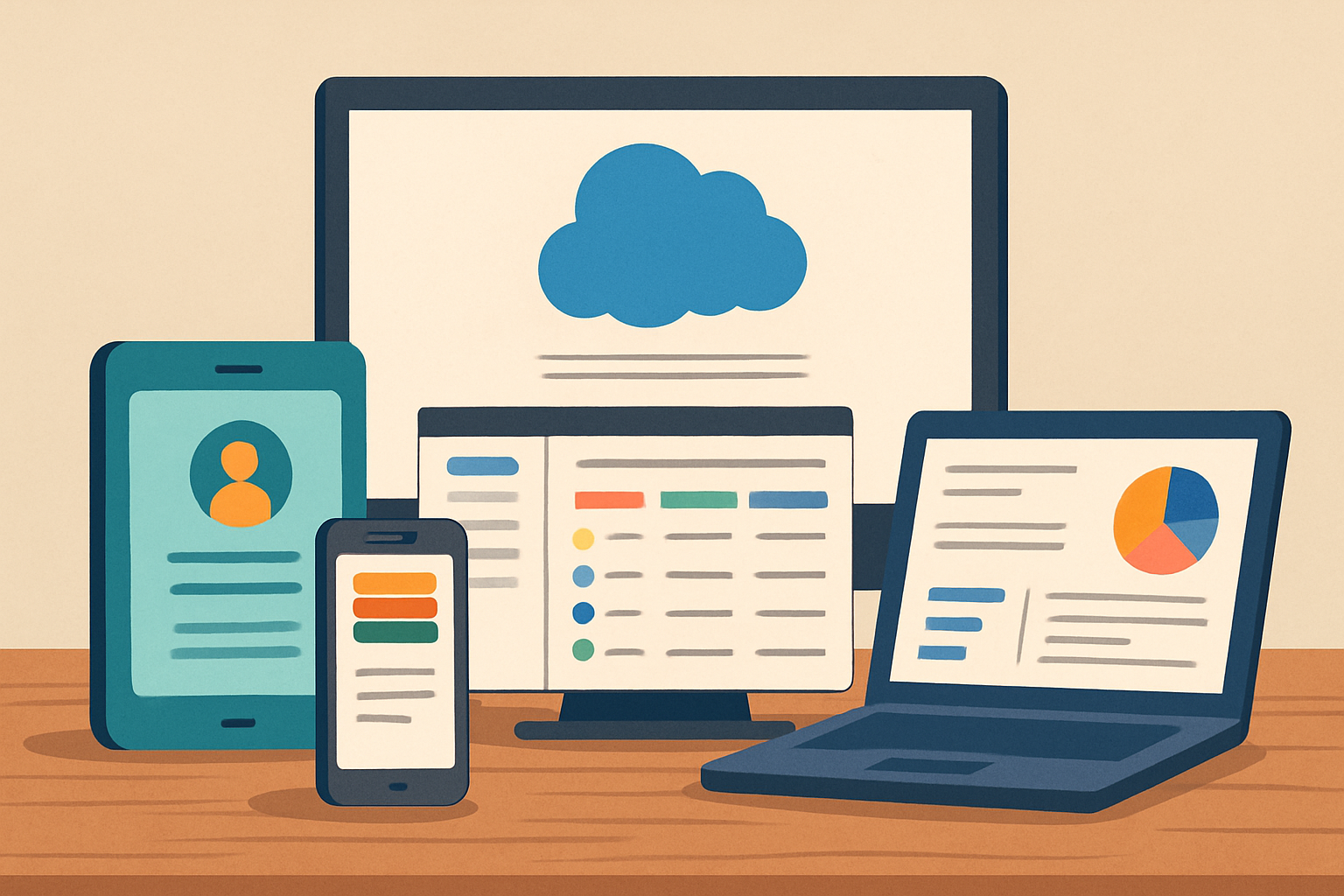
Salesforce describes the Free CRM Suite as an all-in-one system to manage your customers, deals, and support in one place.
But here’s what that actually means in plain English:
- Keep track of every deal and contact.
You can see what stage each customer is in, who’s talked to them, and what needs to happen next. - Stay on top of service requests.
When someone emails with an issue, it creates a case automatically so nothing falls through the cracks. - Send simple marketing emails.
Use ready-made templates for newsletters or updates — no fancy setup required. - See what’s working.
Prebuilt dashboards show you open deals, sales stages, and activity. - Connect your tools.
It works with Gmail, Google Calendar, and Slack so everything you need is in one view.
That’s it. No extra software, no setup fee, and no fine print.
Why Salesforce Made It Free
Salesforce has always been known for its enterprise tools, the kind of software large companies rely on. But for smaller businesses, that version can feel like too much too soon.
This free version changes that. It’s Salesforce saying, “Let’s give smaller teams the same foundation the big players have — without the cost.”
It’s a smart move. Small businesses that start on Salesforce won’t need to migrate later; they’ll just grow into more advanced features when the time comes.
From a business owner’s perspective, it’s refreshing to see a product that isn’t trying to hook you into an upgrade before you’ve even learned how to use it.
What It’s Like to Use
When you log in, the first thing you notice is how clean and simple it feels. Everything is laid out logically: contacts, deals, tasks, and cases are all right where you’d expect.
It’s not flashy — and that’s a good thing. You can click into a deal, update a stage, set a reminder, or log a note in seconds.
The dashboards are easy to understand too. You can see open opportunities, total pipeline, or customer issues without spending half your day building reports.
The built-in email templates are a nice touch. You can send quick follow-ups or newsletters without leaving Salesforce, which makes staying in touch with customers a lot easier.
For most small businesses, this is exactly what you need — not more, not less.
Who It’s Best For
The free suite is designed for teams that are still growing. If any of these sound familiar, it’ll probably help you:
- You’re tracking customers in a spreadsheet and it’s getting out of hand.
- You’re the business owner and the sales team and the support desk.
- You want your customer conversations, deals, and service requests in one place.
- You need visibility but not a six-month implementation project.
It’s also a great fit if you want to test-drive Salesforce before investing in the paid versions. You’ll get a real feel for how it works, not a stripped-down demo.
What’s Not Included
There are a few limitations — which are totally fair considering it’s free.
- You’re limited to two users.
- You won’t get automation or complex analytics.
- Customization is lighter than in paid editions.
If you ever outgrow it, upgrading is simple. The Starter Suite costs $25 per user per month and adds automation, analytics, and more email options.
But the best part? You don’t have to start over. Everything you’ve already built moves with you.
Why It Stands Out
There are plenty of “free” CRMs out there, but Salesforce’s offering feels different.
It’s reliable, polished, and — unlike most free tools — it doesn’t feel like bait for an upsell.
This is the same technology that powers thousands of established companies, scaled down to what small teams actually need.
And because it connects to Slack, Gmail, and Google Calendar, it fits right into how you already work.
That makes it more than just a contact list. It’s a foundation you can build on.
How to Get Started
If you decide to try it, here’s what we’d recommend:
- Start small. Add your existing customers and a few open deals. Don’t overthink it.
- Keep your data clean. Be consistent with names and fields. It’ll make your reports far more useful later.
- Make it a daily habit. Update Salesforce right after calls or meetings. The more you use it, the more valuable it becomes.
- Connect your calendar and email. This is where it really starts to save time.
- Explore reports. Even the basic ones can show you which deals are stalling or which customers need attention.
Within a few days, you’ll start to wonder how you managed without it.
Final Thoughts
Salesforce’s new Free CRM feels like something small businesses have needed for a long time — a tool that’s easy to start with and actually helps you stay organized. It’s not packed with features you’ll never use or a setup that takes weeks. It just works.
At Revenue Ops LLC, we’ve seen how much time and energy teams waste trying to keep track of customers across emails, notes, and spreadsheets. The Free CRM is a simple way to fix that. It gives you a clear view of your work and helps you build better habits around how you manage customers and deals.
If you want to give it a try, you can start right here: Salesforce’s Free CRM page. And if you need help setting it up or figuring out how to make it fit your process, reach out to us.
In plain language — it’s a straightforward tool that helps you finally get organized, so you can spend less time chasing information and more time actually running your business.

Related articles

7 Signs Your Salesforce Org Needs a Health Check

Salesforce Field Service at Dreamforce 2026: 7 AI Updates Transforming Field Service

Revenue Cloud Advanced After Dreamforce 2026: One Revenue Engine, Every Experience

Dreamforce 2026 Day 3: The Agentic Enterprise Gets Practical

Dreamforce 2026 Day 2: Salesforce Shifts the AI Conversation From Possibility to ROI
